


Missing a gold loan EMI can be stressful because your jewellery is kept with the lender as security. But missing one payment does not normally mean that your gold will be auctioned the next day.
There is a process that lenders must follow. Under the RBI’s current rules, the loan agreement must clearly explain when an auction can happen, what notice period will be given, how the auction will work, and how any extra money left after the auction will be returned to the borrower.
So, if you have missed a gold loan payment, do not panic. First, understand what happens next and what rights you have.
First, Check What Type of Gold Loan You Have
Not every gold loan is paid through monthly EMIs. Some gold loans use regular instalments, while others are bullet repayment loans. According to the RBI, in a bullet loan, both the principal and interest become due at the end of the loan period. Consumption-purpose bullet gold loans are generally capped at 12 months. So before taking any action, check your:
- Loan agreement
- Repayment schedule
- Key Fact Statement or KFS
- Due date
- Outstanding amount
- Interest and charges
This will tell you exactly what payment you have missed.
What Happens When You Miss a Gold Loan EMI?
Missing a gold loan EMI can lead to late payment charges, additional interest, and a negative impact on your credit profile. If payments remain overdue for a longer period, the lender may begin recovery proceedings and, after following the required notice and auction process, may sell the pledged gold to recover the outstanding amount.
1. Your Payment Becomes Overdue
If you do not pay an instalment by its due date, the amount becomes overdue. The lender may then send reminders through calls, SMS, email, letters, or other approved ways.
Your loan agreement and KFS should show the charges that may apply if you fail to meet the repayment terms. RBI requires applicable charges, including auction-related charges, to be clearly stated in the loan documents.
2. Penal Charges May Apply
A lender may charge a penalty for breaking an important loan term, such as failing to make payment on time. However, RBI rules say such a penalty should be charged as a penal charge, not as extra “penal interest” added to the interest rate.
Always check your KFS and loan agreement to see what charges apply to your account.
3. Your Credit Score May Be Affected
Late or missed EMI payments can hurt your credit history. TransUnion CIBIL states that late payments, missed payments, and defaults may negatively affect a person’s CIBIL Score. This can make it harder to get another loan or credit card in the future.
Paying the overdue amount as early as possible can help you avoid further delay, although an already reported late payment may still appear in your credit history.
4. The Loan May Eventually Become an NPA
A missed EMI does not automatically make your loan an NPA on the first day. Under RBI asset-classification rules, a term loan generally becomes a Non-Performing Asset or NPA when interest or principal remains overdue for more than 90 days. Gold loans do not have a general exemption from this 90-day rule.
NPA classification and gold auction are not exactly the same thing. The lender’s auction action must still follow the loan agreement and RBI auction rules.
Can the Lender Auction Your Gold After One Missed EMI?
Not automatically. The lender must have an auction process in its approved policy, and the loan agreement must state the events that can lead to auction. It must also state how much notice the borrower will receive before the pledged gold is sold.
RBI requires lenders to give borrowers adequate notice to repay or settle their dues before starting the auction process.
This is why borrowers should never ignore repayment reminders or auction notices.
Your Rights Before a Gold Loan Auction
Right to Know the Auction Terms
Your loan agreement should explain:
- When an auction may take place
- Notice period before auction
- Auction-related charges
- Process used for auction
- Return of any extra auction money
- Timeline for return of pledged gold after repayment
RBI requires these important terms to form part of the loan documents.
Right to Receive Notice
Your lender must give you adequate notice before auctioning the pledged gold. The lender must also keep a copy of the notice and proof that it was sent or received.
If the borrower or legal heir cannot be found even after reasonable efforts and a public notice, the lender may proceed only after one month has passed from the public notice.
Right to Clear or Settle the Loan Before Auction
The lender’s policy and loan agreement must provide a notice period during which the borrower can repay or settle the outstanding loan before the auction takes place.
If you receive an auction notice, contact the lender immediately and ask for the exact amount needed to regularise or settle the account. Do not wait until the auction date.
Right to Clear Communication
Important communication, including loan terms and information affecting the borrower’s interest, should be given in the regional language or another language chosen by the borrower.
For an illiterate borrower, important terms must be explained in front of a witness who is not an employee of the lender.
RBI Gold Loan Auction Guidelines
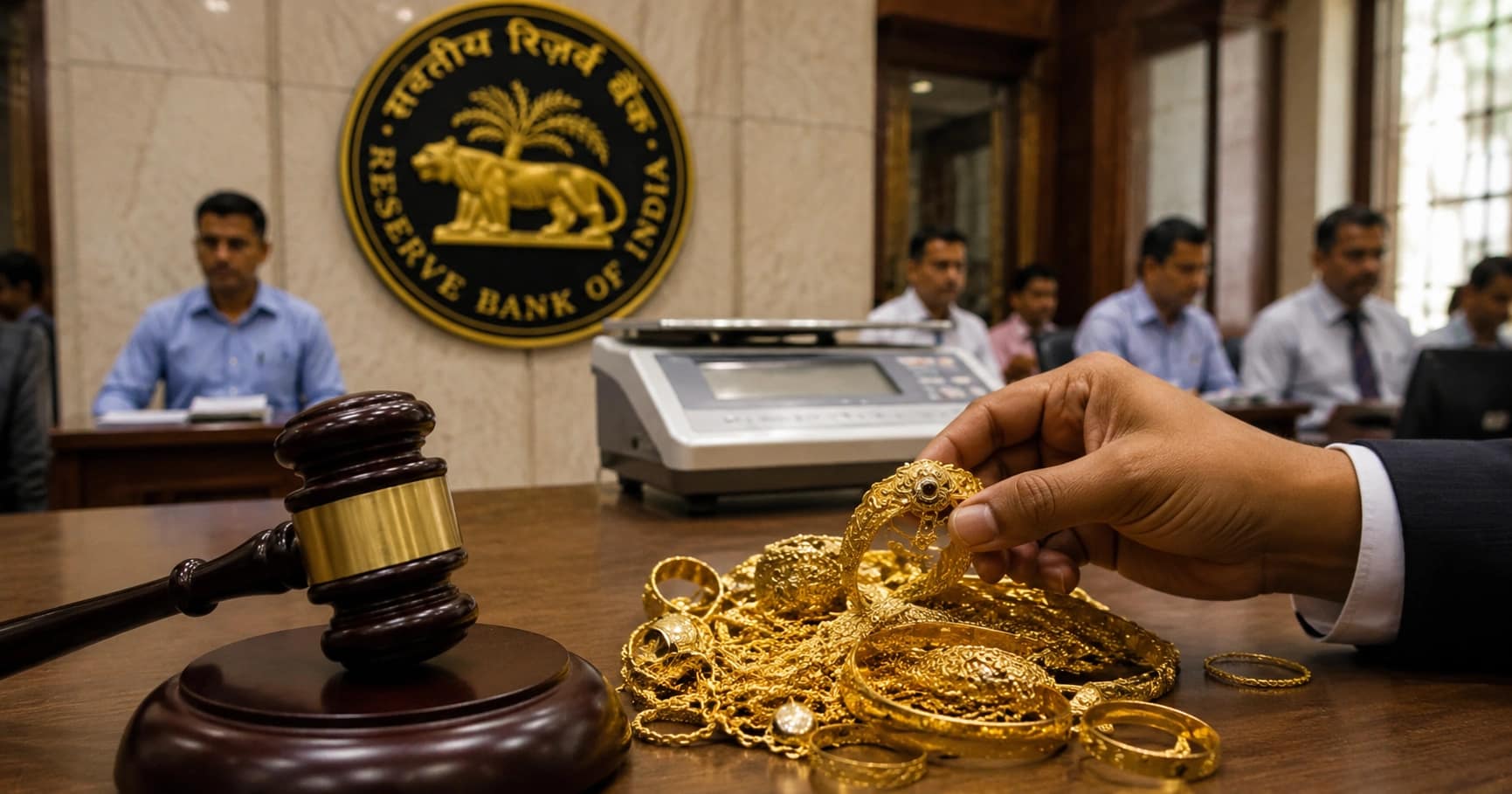
If the loan remains unpaid and the lender moves ahead with an auction, RBI has set clear rules.
Auction Must Be Publicly Announced
The lender must announce the auction through advertisements in at least two newspapers. One should be in the regional language and another in a national daily newspaper.
There Is a Minimum Reserve Price
The reserve price is the minimum starting value used for the auction. Under current RBI rules, the reserve price must generally be at least 90% of the current value of the pledged gold or silver. If two auctions fail, the reserve price may be reduced, but it cannot be below 85% of the current value.
First Auction Should Be in the Same District
The first auction must normally be held physically in the same district where the lending branch is located. If the first auction fails, the lender may conduct the next auction in a nearby district or use an online auction.
The Lender Cannot Buy Your Gold for Itself
RBI says the lender and its related parties should not take part in the auction. This rule is meant to reduce conflict of interest and make the sale more fair.
Also Read: How Does Gold Purity Affect Your Gold Loan Amount?
What Happens to the Money After Your Gold Is Auctioned?
The lender cannot simply keep the entire auction amount. After the auction, the lender must give the borrower or legal heir details showing:
- Amount received from the auction
- Total loan dues adjusted
- Balance left after adjustment
If the gold sells for more than the amount you owe, the extra amount must be returned to you within seven working days from receipt of the full auction proceeds.
Example
Suppose your total outstanding loan and permitted charges come to ₹2,00,000.
If your pledged gold sells for ₹2,25,000, the remaining amount after permitted adjustments should be refunded to you.
If the auction amount is not enough to clear your outstanding balance, RBI allows the lender to recover the shortfall according to the terms of the loan agreement.
What Are Your Rights After Full Gold Loan Repayment?
Once you fully repay or settle your loan, your pledged gold must be returned. RBI’s repayment of Gold loan guidelines says lenders should return the gold on the same day, but in any case no later than seven working days after full repayment or settlement.
The gold should also be checked against the original assay certificate before being handed back.
What If the Lender Delays Returning Your Gold?
If the delay is the lender’s fault, RBI requires compensation of ₹5,000 for every day of delay beyond the allowed timeline. The borrower may also have other rights available under applicable law.
What If the Gold Is Lost or Damaged?
If the pledged jewellery is damaged while it is with the lender, the lender must bear the cost of repair. If the gold is lost, or there is a problem with its weight, quantity, or purity while it is in the lender’s custody, the borrower must be suitably compensated under the lender’s policy and RBI rules.
What Should You Do If You Cannot Pay Your Gold Loan EMI?
Do not ignore the lender. Contact the branch or lender as soon as you know that payment will be difficult.
Ask for:
- Current outstanding amount
- Overdue EMI or interest
- Penal charges, if any
- Last date for payment
- Available repayment options
- Renewal options, if allowed
- Settlement amount if an auction notice has already been issued
RBI permits renewal or a top-up only under certain conditions. For example, renewal requires a formal request and the loan must still be classified as standard; a bullet repayment loan can be renewed only after accrued interest is paid.
Do not assume that renewal is automatic. It depends on the lender’s policy and your account status.
Also Read: Gold Investment Myths vs Facts: What You Must Know
What If the Lender Does Not Follow RBI Rules?
First, make a written complaint to the bank or NBFC and keep proof.
Under the Reserve Bank – Integrated Ombudsman Scheme, 2026, you can approach the RBI Ombudsman if the lender does not reply within 30 days, or if you receive a reply but are not satisfied with the solution, provided the complaint meets the Scheme’s conditions.
The RBI Ombudsman process is free for eligible complaints.
A complaint about service failure is different from asking RBI to cancel a genuine loan debt. The Ombudsman deals with eligible complaints about deficiency in service and does not replace the borrower’s duty to repay a valid loan.
Need Funds? Get a Gold Loan with Sai Gold OGL
Turn the value of your gold into the funds you need. Explore Sai Gold OGL’s gold loan options and get started with a simple application process.
Apply for a Gold Loan Today
Conclusion
Missing a gold loan EMI is serious, but it does not mean you lose your gold immediately. The best step is to act early. Read your loan agreement, check the overdue amount, speak to your lender, and try to regularise the account before the matter reaches the auction stage.
If auction becomes necessary, RBI rules give borrowers important protections. You should receive notice, the auction must follow a clear process, the reserve price must meet RBI limits, and any extra auction money must be returned to you.
The most important rule is simple: never ignore a missed gold loan payment or an auction notice. Contact the lender early and keep all payment and communication records.
Frequently Asked Questions
What Happens If I Miss One Gold Loan EMI?
Missing one gold loan EMI normally makes the instalment overdue; it does not automatically mean immediate auction. The lender may contact you and apply disclosed penal charges. Auction can happen only according to the loan agreement and applicable RBI notice and auction rules.
Can a Bank Auction Gold Without Informing the Borrower?
A lender must give adequate notice before starting the gold loan auction process. The loan agreement must also state the notice period and auction conditions. RBI requires lenders to keep records of the notice and its acknowledgement.
After How Many Missed EMIs Can Gold Be Auctioned?
RBI does not set one universal number of missed EMIs that automatically causes auction. The auction trigger and notice period must be stated in the lender’s policy and loan agreement. Borrowers should check their own loan documents.
Can I Stop a Gold Loan Auction by Paying My Dues?
You may be able to stop the auction by repaying or settling the required dues within the notice period. RBI requires lenders to provide borrowers an opportunity to repay or settle before auction, as stated in the loan terms.
What Happens If My Gold Sells for More Than My Loan Amount?
The lender must refund the surplus after adjusting valid loan dues and charges. Under current RBI rules, this extra amount must be returned within seven working days after the lender receives the full auction proceeds.
Does Missing a Gold Loan EMI Affect CIBIL Score?
Yes, late or missed loan payments can negatively affect your CIBIL Score if reported as part of your credit history. CIBIL lists payment history, including late and missed EMIs, as an important factor affecting the score.
How Long Can a Gold Loan Stay Overdue Before Becoming NPA?
For a normal term loan, principal or interest that remains overdue for more than 90 days can lead to NPA classification under RBI rules. Some agricultural loans follow different crop-based rules, so the exact treatment depends on the loan type.