
The value of the diamond does not end at jewelry in case of emergency and need for cash. Rather than disposing of it, you could borrow from the value of the diamond without selling the asset. However, before using the diamond for collateral purposes, it is essential to know what the process entails, what you can borrow and at what cost. The interest rate on the loan should not be the only aspect of borrowing that you check out. There are other considerations involved such as valuation, certification, terms of loan repayment and storage arrangements. Let us begin!
1. The Valuation Method and LTV
Firstly, you will need to consider how the lender will determine the worth of your diamond. In contrast to the case of gold, the determination of diamond’s worth is not dependent only on the weight of the stone. The carat, cut, color, clarity, and certification may affect the result.
Additionally, you need to consider what the loan-to-value ratio means since the lenders tend to give only part of the assessed worth and not the total worth. This ratio for the Diamond Loan from Sai Gold OGL is 60–75%.
2. The 4Cs and Certification
It is advisable to review the certificate of your diamond before applying for the loan. Carat, cut, color, and clarity, collectively known as the 4Cs, are key determinants used in measuring the quality of diamonds. A certified certificate may also be useful in this regard.
The certificate is not always mandatory but is useful in valuing your diamond. In addition, the lender may do his/her own evaluation regardless of whether a certificate has been provided or not.
3. Interest Rates and Hidden Charges
The interest rate is important, but it should not be the only number you look at. Before accepting a loan, it is important to understand the diamond loan interest rates and charges, including processing, valuation, documentation, late-payment and other applicable fees.
Ask for a clear breakdown of the total cost before accepting the loan. Check whether there are processing, valuation, documentation, late-payment or other applicable charges. You should also read the terms covering prepayment or foreclosure.
A lower advertised interest rate does not necessarily mean the loan will be cheaper overall. Sai Gold OGL currently states that its Diamond Loan has transparent charges and no foreclosure fee, but borrowers should still review the applicable agreement before signing.
4. The Repayment Structure
Make sure you know exactly how the loan has to be repaid. Check the tenure, payment schedule, due dates and the total amount payable throughout the loan period. It is also worth asking what happens if you miss a payment or cannot repay on time. Understanding these terms beforehand can help you avoid unnecessary charges and complications.
Most importantly, read the section of the agreement dealing with default and recovery of the pledged asset. Never assume that missing payments will simply extend the loan without consequences.
5. Physical Security and Vault Storage
When you hand over a valuable diamond, its storage arrangements deserve careful attention. Ask where the pledged jewellery will be kept, whether it is insured and what security measures are in place.
You should also understand how the diamond is identified and what process is followed when you repay the loan and request its return. The company states that pledged diamonds are kept in an RBI-approved vault with 24/7 CCTV surveillance. Its Fair Practices Code also refers to insurance and proper storage arrangements for pledged jewellery.
6. Lender Credibility and Regulation
Before pledging a valuable asset, take a few minutes to check who you are borrowing from. Look at the lender’s legal name, regulatory status, branch details, loan agreement and customer grievance process. You should also make sure the person handling your application provides proper documentation for the transaction.
Sai Gold OGL identifies itself as a unit of Singari Motor Finance (India) Pvt Ltd and states that it is an RBI-approved NBFC. These details can be checked alongside the actual loan terms before making a decision.
Essential Documents Required for a Diamond Loan
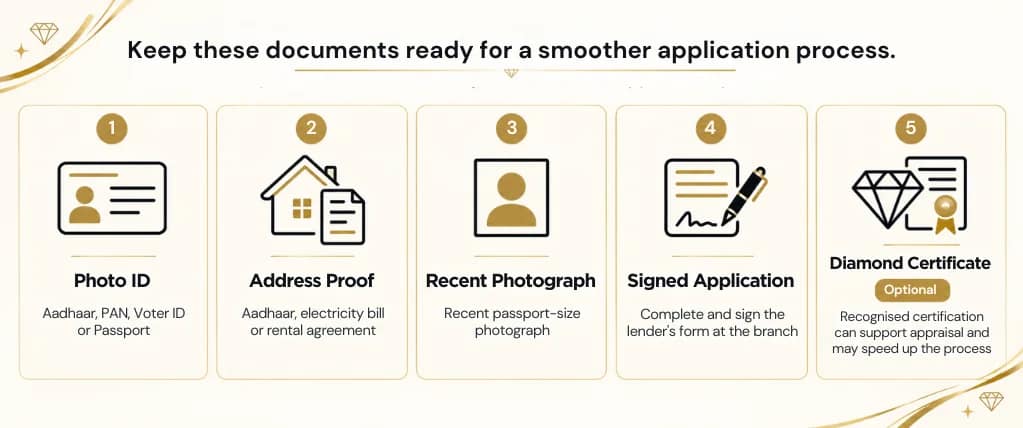
Keeping your documents ready can make the KYC and application process more straightforward.
- Photo ID: Aadhaar, PAN, Voter ID or Passport can be used to verify your identity.
- Address Proof: Aadhaar, electricity bill or rental agreement can confirm your residential address.
- Recent Passport-Size Photograph: A recent photograph is required as part of the loan application.
- Signed Loan Application Form: Complete and sign the application form provided by the lender at the branch.
- Diamond Certificate: Not mandatory, but recognised certification can support appraisal and may help speed up the process.
For this particular Diamond Loan, the listed requirements include photo ID, address proof, a recent photograph and a signed application form. Income proof is not listed as a requirement. A diamond certificate is optional, although recognised certification may make the valuation process easier.
Final Thoughts
A loan against diamonds can help you arrange funds without immediately selling an asset you may want to keep. But before agreeing to the loan, take time to understand how your diamond will be valued, how much of that value you can borrow and what the complete cost of borrowing will be. Repayment terms and storage arrangements also deserve your attention.
The safest approach is simple: ask questions before pledging the diamond, read the agreement carefully and keep your important documents ready. Do not judge a loan only by the amount offered. Understanding the valuation, charges, repayment obligations and lender’s terms can help you enter the agreement with a much clearer idea of what to expect.