In today’s fast moving financial world, borrowers are no longer limited to traditional banks for loans. One of the most popular alternatives is an NBFC loan. But what exactly does this mean, and how does it differ from a bank loan? Let’s explore the meaning, features, and benefits of NBFC loans in detail.
What Is NBFC Loan and How Does It Work?
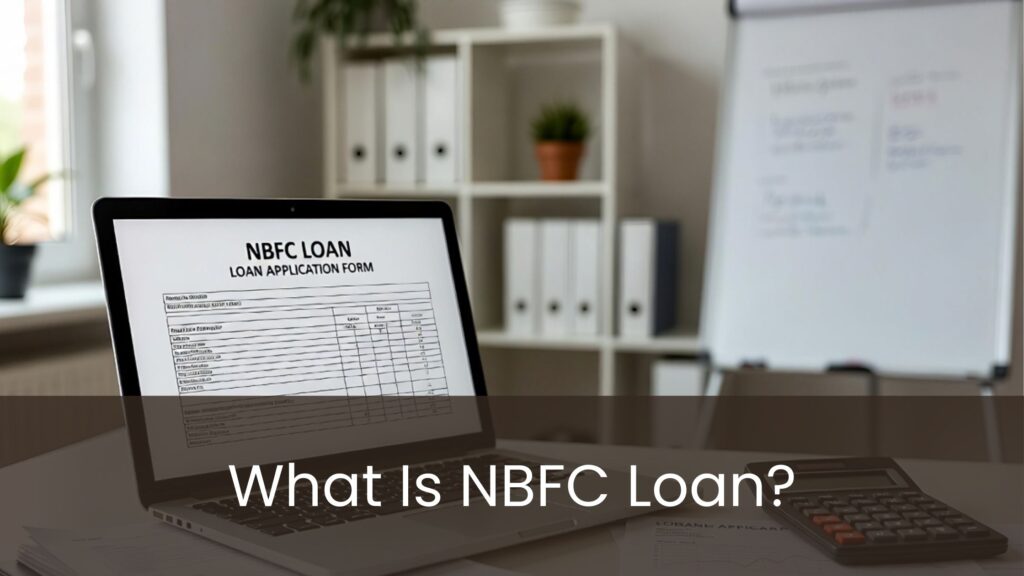
An NBFC loan is a loan provided by a Non Banking Financial Company (NBFC). An NBFC is a financial institution registered under the Reserve Bank of India (RBI) that offers banking like services such as loans, credit facilities, asset financing, and investment products but does not hold a full banking license.
Unlike traditional banks, NBFCs cannot accept demand deposits (like savings or current accounts). However, they play a vital role in improving credit access, especially for individuals and small businesses that may not meet strict bank eligibility criteria.
Some well-known NBFCs in India include:
- Bajaj Finserv
- Tata Capital
- Mahindra Finance
- Shriram Finance
These institutions offer a wide range of loan products tailored to various customer needs.
Types of NBFC Loan
NBFCs provide diverse loan options, including:
1. Personal Loans
Unsecured loans for personal expenses such as medical emergencies, travel, education, or home renovation.
2. Business Loans
Financial assistance for small and medium enterprises (SMEs) to manage working capital, expand operations, or purchase equipment.
3. Vehicle Loans
Loans for purchasing two-wheelers, cars, commercial vehicles, or tractors.
4. Home Loans
Housing finance for buying, constructing, or renovating a property.
5. Gold Loans
Loans secured against gold ornaments.
6. Microfinance Loans
Small-ticket loans provided to low income individuals or self-help groups.
Key Features of NBFC Loan
NBFC loans have certain distinctive features that make them attractive to borrowers:
1. Flexible Eligibility Criteria
NBFCs usually have more relaxed eligibility requirements compared to banks. They may approve loans for individuals with moderate credit scores or irregular income.
2. Faster Processing
Loan approval and disbursement are often quicker because NBFCs use streamlined processes and digital platforms.
3. Minimal Documentation
Documentation requirements are generally simpler, especially for small ticket loans.
4. Customized Loan Products
NBFCs often tailor loan products based on customer needs, such as flexible repayment schedules or step-up EMIs.
5. Higher Interest Rates (in Some Cases)
Since NBFCs take on higher credit risk, interest rates may be slightly higher than those of traditional banks.
6. Digital Accessibility
Many NBFCs provide online applications, instant approvals, and paperless processing.
NBFC Loan vs Bank Loan: Key Differences
Understanding the difference between NBFC loans and bank loans can help you choose wisely.
| Feature | NBFC Loan | Bank Loan |
|---|---|---|
| Regulation | Regulated by RBI | Regulated by RBI |
| Deposit Acceptance | Cannot accept demand deposits | Can accept deposits |
| Processing Speed | Faster | Moderate |
| Eligibility Criteria | Flexible | Strict |
| Interest Rates | Slightly higher | Usually lower |
| Documentation | Minimal | Detailed |
While both are regulated by the Reserve Bank of India, banks typically have stricter lending norms.
Benefits of Taking an NBFC Loan
1. Easy Access to Credit
NBFCs play a crucial role in financial inclusion. They extend credit to individuals and small businesses that may not qualify for bank loans.
2. Quick Disbursement
For urgent needs—such as medical emergencies or working capital requirements—NBFCs can disburse funds quickly.
3. Flexible Repayment Options
Borrowers may choose repayment tenures and EMI structures suited to their income flow.
4. Doorstep and Digital Services
Some NBFCs offer doorstep verification or fully digital loan processing, reducing the need for branch visits.
5. Support for Small Businesses
Small enterprises often face challenges securing bank funding. NBFCs are more willing to fund startups and MSMEs.
6. Specialized Lending
NBFCs may specialize in specific sectors such as vehicle financing, gold loans, or microfinance, offering better product understanding.
Who Should Consider an NBFC Loan?
An NBFC loan may be suitable if:
- You need urgent funds.
- Your credit score is average.
- You lack extensive income documentation.
- You are a self-employed individual or small business owner.
- You prefer a digital and hassle-free process.
However, borrowers should always compare interest rates, processing fees, and terms before finalizing.
Things to Keep in Mind Before Applying
- Check RBI Registration: Ensure the NBFC is registered with the Reserve Bank of India.
- Compare Interest Rates: Evaluate the total cost of borrowing.
- Understand Hidden Charges: Check processing fees, prepayment charges, and late payment penalties.
- Read the Loan Agreement Carefully: Understand repayment terms and foreclosure conditions.
- Assess Your Repayment Capacity: Avoid over borrowing.
Frequently Asked Questions (FAQs)
NBFC stands for Non Banking Financial Company. It is a financial institution registered with the Reserve Bank of India that provides loans and other financial services but does not operate as a traditional bank.
Yes, NBFCs regulated by the RBI operate under strict guidelines. Always verify the company’s registration before applying.
In some cases, yes. NBFCs may charge slightly higher interest rates due to flexible eligibility and faster approvals.
Many NBFCs are more flexible than banks and may approve loans for borrowers with moderate or low credit scores, depending on their risk assessment.
Typically, you need identity proof, address proof, income proof (salary slips or bank statements), and PAN details. Requirements may vary depending on the loan type and NBFC.