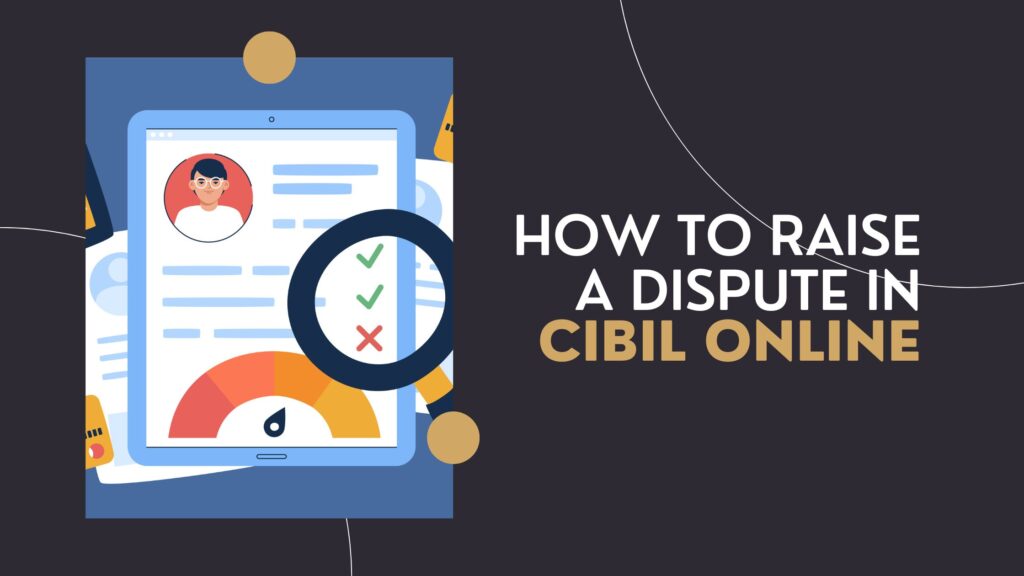
Your CIBIL score plays a crucial role in your financial life. Whether you are applying for a personal loan, home loan, credit card, or even renting a house, lenders rely heavily on this three-digit number to assess your creditworthiness. If you notice errors in your report, knowing how to raise a dispute in CIBIL becomes essential, as even a small mistake can lead to loan rejections, higher interest rates, or unfavorable credit terms.
Unfortunately, mistakes in credit reports are not uncommon. These may arise due to incorrect data submitted by lenders, clerical errors, outdated information, or even identity mismatches. The good news is that CIBIL provides a structured dispute resolution process that allows you to raise and resolve such issues.
This article explains when you should raise a dispute, common errors in CIBIL reports, and a step-by-step guide on how to raise a dispute in CIBIL to correct your credit score.
Understanding CIBIL and Your Credit Score
CIBIL (Credit Information Bureau (India) Limited), now part of TransUnion, collects credit information from banks and financial institutions. Based on your repayment behavior, outstanding loans, and credit usage, CIBIL generates:
- Credit Score (ranging from 300 to 900)
- Credit Report (detailed history of loans and credit cards)
A score above 750 is generally considered good.
Your CIBIL score may be wrong due to incorrect data, not because of your actual financial behavior. That is why reviewing your credit report regularly is essential.
Common Reasons Why Your CIBIL Score May Be Wrong
Before raising a dispute, it helps to understand the types of errors that commonly occur:
- Incorrect Personal Details
Errors in name, date of birth, PAN, address, or phone number. - Loans or Credit Cards That Don’t Belong to You
This may happen due to identity mismatch or data reporting errors. - Incorrect Loan Status
Loans shown as “active” even after closure. - Wrong Payment History
Timely payments reported as late or missed EMIs that never occurred. - Duplicate Accounts
Same loan or credit card appearing more than once. - Incorrect Outstanding Balance or Credit Limit
Higher outstanding amounts or lower limits than actual.
If any of these errors appear in your report, you should raise a dispute immediately.
When Should You Raise a Dispute in CIBIL?
You should raise a dispute if:
- Your loan or credit card application is rejected unexpectedly
- Your CIBIL score drops suddenly without reason
- You spot incorrect or unfamiliar entries in your credit report
- Closed loans still appear as active
- You are planning to apply for a major loan soon
It is advisable to raise disputes at least 2,3 months before applying for new credit, as resolution takes time.
How to Raise a Dispute in CIBIL: Step-by-Step Process
Step 1: Get Your Latest CIBIL Credit Report
Visit the official CIBIL website and request your free credit report (available once a year). Carefully review:
- Personal details
- Account information
- Payment history
- Enquiries
Make a note of the incorrect entries you want to dispute.
Step 2: Log In to the CIBIL Dispute Resolution Portal
Once you have your report:
- Log in using your registered credentials
- Navigate to the Dispute Resolution section
- Select “Raise a Dispute”
If you are a first-time user, you may need to register and verify your identity.
Step 3: Select the Type of Dispute
CIBIL allows disputes under two main categories:
- Personal Information Dispute
- Account-Related Dispute
For account disputes, you can further select issues such as:
- Ownership issue
- Incorrect balance
- Wrong payment status
- Duplicate account
- Closed account still active
Select the appropriate category carefully.
Step 4: Provide Correct Details and Submit
Enter the correct information as per your records.
Do not upload documents unless specifically requested. CIBIL forwards your dispute to the concerned lender, who verifies and updates the information if required.
Once submitted, you will receive a Dispute ID. Save it for tracking purposes.
Step 5: Track Dispute Status
You can check the status of your dispute online using the Dispute ID. The typical resolution timeline is:
- 30 days (as per RBI guidelines)
Possible outcomes include:
- Data corrected
- Data verified as accurate (no change)
- Dispute closed due to insufficient information
What Happens After You Raise a Dispute in CIBIL?
If the lender accepts the correction request:
- The credit report is updated
- Your CIBIL score may improve in the next refresh cycle
If the lender rejects the dispute:
- The data remains unchanged
- You may need to contact the lender directly with proof
CIBIL itself does not change data; it only acts as an intermediary between you and the reporting institution.
Tips to Ensure Faster Resolution After You Raise a Dispute in CIBIL
- Raise one dispute per issue instead of multiple errors in one request
- Be precise and accurate while selecting dispute reasons
- Keep loan closure letters and payment proofs handy
- Avoid raising frivolous or incorrect disputes
- Follow up with the lender if required
How Often Can You Raise a Dispute in CIBIL?
There is no limit on the number of disputes you can raise. However, raising repeated disputes for the same issue without new evidence may lead to rejection.
Importance of Monitoring Your CIBIL Score Regularly
Regular monitoring helps you:
- Detect fraud early
- Maintain a healthy credit profile
- Improve loan eligibility
- Negotiate better interest rates
You should check your CIBIL report at least twice a year, especially before making major financial decisions.
Frequently Asked Questions (FAQs)
No. Raising a dispute does not negatively affect your CIBIL score. Only incorrect or adverse credit behavior impacts your score.
Typically, disputes are resolved within 30 days, depending on how quickly the lender responds.
Yes. You can raise the dispute directly on the CIBIL portal. However, for faster resolution, contacting the lender may help.
If the lender rejects the correction, you can escalate the issue by providing proof directly to the lender or approaching the banking ombudsman.
Not instantly. Your CIBIL score updates during the next data refresh cycle, usually within a few weeks after correction.